API smoke tests after every deploy

A deploy finishes, the pipeline is green, and twenty minutes later a customer reports that checkout is broken. The pipeline was green because it tested the code before it shipped, not the system after. A smoke test closes that gap: a handful of real requests against the environment you just deployed to, run automatically, seconds after the deploy.
What belongs in a smoke test
A smoke test answers one question: is the thing basically working? It's not a regression suite. Keep it to 5–15 requests that:
- Touch every critical dependency once. Database, cache, queue, search, the payment provider's sandbox.
- Follow the money. Login, the main read path, the main write path.
- Are safe to repeat. Read-only in production, or creating clearly marked test data that's cleaned up.
- Finish in under a minute. If it's slow, people stop waiting for it.
Put them in a Smoke folder of the collection you already have, so they share auth, variables and environments with everything else.
Checks that mean something
A 200 isn't enough. A smoke check should fail if the service is up but useless:
pm.test('search returns results', () => {
  pm.expect(pm.response.code).to.equal(200);
  pm.expect(pm.response.json().items).to.not.be.empty;
});

pm.test('version matches the release', () => {
  pm.expect(pm.response.json().version).to.equal(pm.environment.get('expectedVersion'));
});Run it right after the deploy
In GitHub Actions, as a job that depends on the deploy job:
smoke:
  needs: deploy
  runs-on: ubuntu-latest
  steps:
    - uses: actions/setup-node@v4
      with:
        node-version: 22
    - run: npm install -g @requestarium/cli
    - env:
        REQUESTARIUM_TOKEN: ${{ secrets.REQUESTARIUM_TOKEN }}
      run: |
        requestarium run-collection "Orders API" --folder Smoke --env Production \
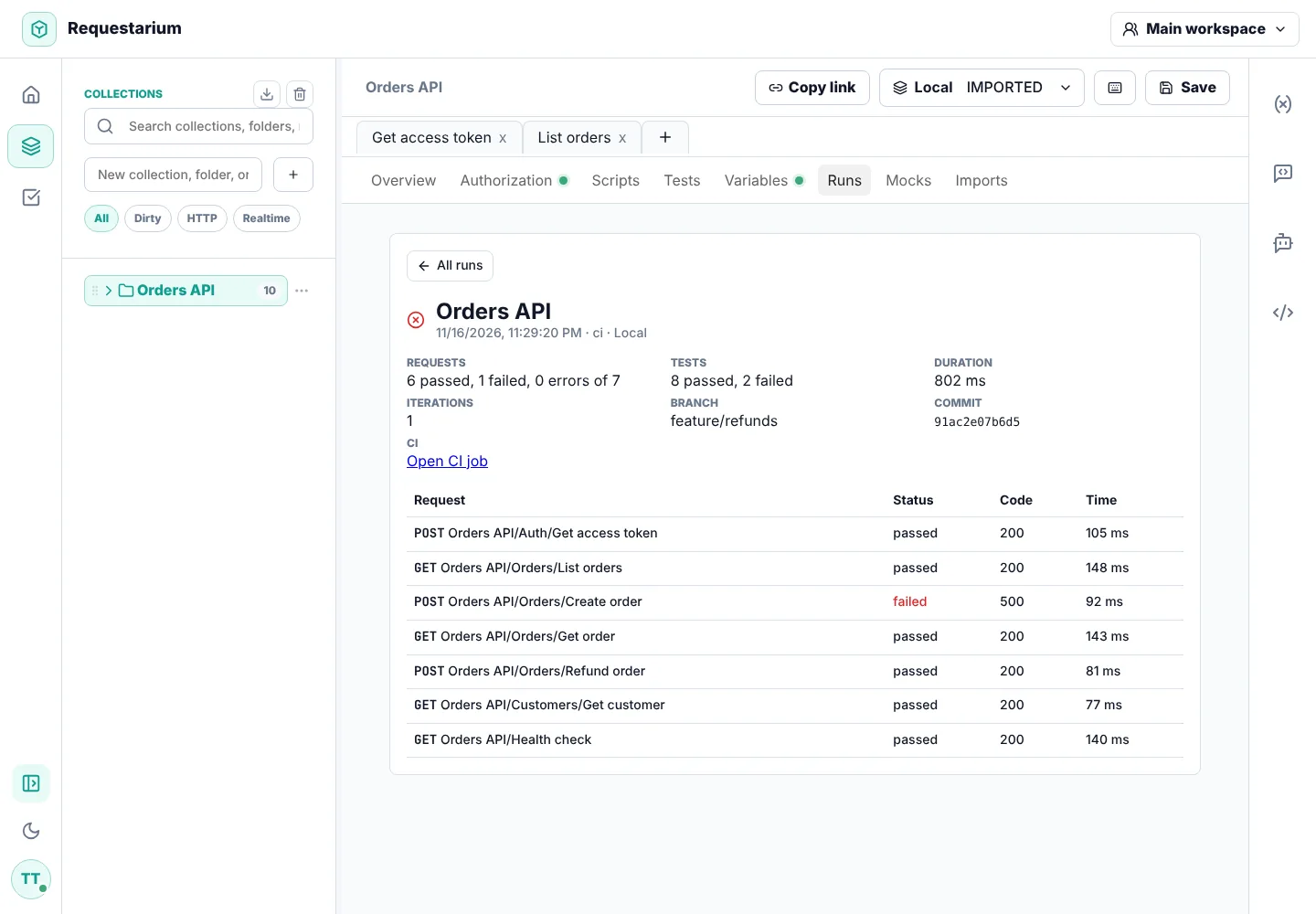
--var expectedVersion=${{ github.sha }} --bail --retries 3 --save-run--bailstops at the first failure: you want to know now, not after 14 more timeouts.--retries 3absorbs the few seconds of 502/503 while a load balancer shifts traffic, with backoff. A 500 is never retried, so real errors still fail.--var expectedVersion=…passes the release identifier in for the version check.--save-runrecords the run with the commit, so the release history shows which deploy was verified.
The same pattern works in GitLab CI, Jenkins, Azure Pipelines and the rest.
Make a failure impossible to miss
- Fail the pipeline. The CLI exits with code 1, so the deploy pipeline goes red.
- Open an issue.
--jira-on-failure OPSfiles a Jira issue with the failed requests and the commit. See File Jira issues when API tests fail. - Roll back automatically if your platform supports it: make the rollback step run when the smoke job fails.
Smoke, then regression
A good order after a deploy to staging:
- Smoke (
--folder Smoke --bail), under a minute. - Full collection with a p95 budget, a few minutes.
- Promote to production only if both pass, then run Smoke again against production.